Kalamkari
Pen-work, in the most literal sense — pattern drawn, not printed
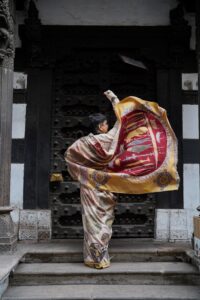
Kalam means pen. Kari means work. Kalamkari, taken plainly, means pen-work — and unlike most textile names that describe a finished look, this one describes the tool in the artisan’s hand.
Traditionally, that tool is a bamboo or date-palm stick, its tip worked into a fine point and wrapped to hold dye like a reservoir. With it, an artisan draws — freehand, without a stencil — directly onto cloth. What emerges is not printed pattern repeated mechanically down a length of fabric. It is drawing, in dye, done once, by one hand.
Two Traditions Under One Name
Kalamkari, as practiced in Andhra Pradesh, has historically developed along two distinct paths. The Srikalahasti style is entirely hand-painted, freehand, historically closely tied to temple textiles depicting mythological and narrative scenes — the pen doing all the work, start to finish.
The Machilipatnam style combines hand-block printing for outlines with hand-painting and dyeing to fill colour in — a tradition with its own significant trade history, textiles from this region historically exported as far as Persia and Europe.
Both rely on natural dyes — myrobalan, indigo, madder root, pomegranate rind among them — and both involve a long sequence of washing, sun-bleaching, mordant treatment, and dyeing, repeated in stages, long before a single figure is drawn.
Why Kalamkari Is Made to Order
This is not a technique that can be rushed to meet a stock number. Hand-painting a piece — freehand, motif by motif, exactly as the Srikalahasti tradition demands — takes real, unavoidable time. That is the honest reason every piece in this collection is made to order: the artist begins painting only once a piece is truly wanted, because painting it any earlier would mean painting it for no one in particular.
What you receive was never sitting finished in inventory. It was drawn, by hand, for you.
Signed, Srinivas Varkala
The collection, in full.
Explore Kalamkari